

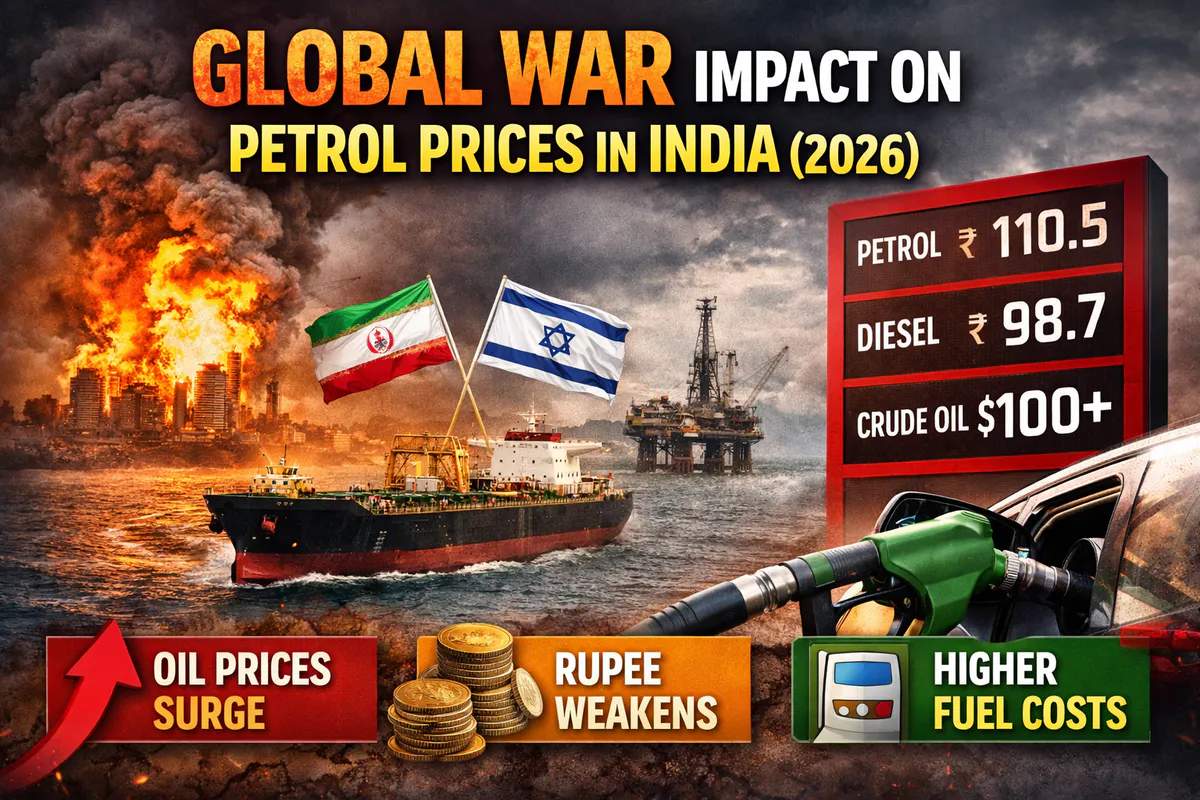
How Global War Is Affecting Petrol Prices in India (2026): Causes, Impact & What It Means for You
How Global War Is Affecting Petrol Prices in India (2026)
The rising petrol prices in India during 2026 have become a major concern for households, businesses, and the overall economy. One of the biggest reasons behind this surge is the ongoing global conflict, especially tensions linked to events like the Iran–Israel Conflict.
But how exactly does a war happening thousands of kilometers away impact fuel prices in India? Let’s break it down in simple terms.
Why Global War Impacts Petrol Prices
1. Disruption in Crude Oil Supply
Most of the world’s oil comes from the Middle East. When conflicts arise in this region:
- Oil production slows down
- Supply chains get disrupted
- Export routes become risky
This leads to reduced supply and higher global oil prices.
2. Transportation & Shipping Risks
War zones increase risks in key shipping routes like:
- Strait of Hormuz
- Red Sea routes
Shipping companies charge higher insurance premiums, increasing overall transportation costs.
These extra costs directly impact fuel prices in India.
3. Surge in Global Crude Oil Prices
When supply decreases and demand remains high:
- Crude oil prices rise globally
- Countries like India (which import oil) pay more
Even a small increase in crude oil prices can significantly affect petrol rates.
🇮🇳 Why India Is Highly Affected
1. Heavy Dependence on Imports
India imports around 85% of its crude oil. This makes the country vulnerable to global price changes.
2. Rupee vs Dollar Impact
Oil is traded in US dollars. When:
- The Indian rupee weakens
- Dollar becomes stronger
India has to pay more for oil imports.

3. Taxes on Fuel
Petrol prices in India include:
- Central government taxes
- State government VAT
Even when crude prices fluctuate, taxes keep fuel prices relatively high.
Current Situation in 2026
Due to ongoing global tensions like the Iran–Israel Conflict:
- Crude oil prices have crossed critical levels
- Petrol prices in India have increased in many cities
- Transportation and logistics costs are rising
This is causing inflation across multiple sectors.
Impact on Common People
1. Higher Daily Expenses
- Increased fuel costs = expensive travel
- Auto fares & cab prices go up
2. Rising Cost of Goods
Fuel affects transportation, so:
- Food prices increase
- Essential goods become costly
3. Business & Economy Impact
- Small businesses face higher logistics costs
- Industries see reduced profit margins
What Could Happen Next?
If War Continues:
- Petrol prices may rise further
- Inflation may increase
- Economic growth could slow down
If Situation Stabilizes:
- Oil prices may fall
- Petrol rates could reduce
- Market stability may return
Government Measures in India
To control the impact, the government may:
- Reduce fuel taxes
- Increase strategic oil reserves
- Explore alternative energy sources
Focus is also shifting towards:
- Electric vehicles (EVs)
- Renewable energy
Long-Term Solution: Reduce Oil Dependency
The current situation highlights the need for:
- More EV adoption
- Solar and renewable energy
- Public transport improvements
India is slowly moving towards energy independence.
Key Takeaway
The rise in petrol prices in India is not just a local issue—it’s deeply connected to global events like the Iran–Israel Conflict. Wars disrupt supply chains, increase costs, and create economic pressure worldwide.
Conclusion
The global war situation in 2026 is a major factor driving petrol prices in India. From supply disruptions to currency fluctuations, multiple factors are at play. While short-term relief depends on global stability, long-term solutions lie in reducing dependence on imported oil.
Understanding these factors helps you stay informed and prepared for economic changes.